

draw the line to save Coral Bay.
Coral Bay is at risk from an ill-placed and shortsighted Mega Marina development plan by Summers End Group (SEG) that would permanently alter the coastline and culture of our beloved island.
It's time to draw the line and demand a better solution.
Coral Bay, Slipping Away
This rendering was based on the original (2014) marina slip design documents and is populated at 75% occupancy, making it an accurate rendering of the currently proposed marina size (115 slips).
It is a photorealistic rendering from a vantage point on the west side of Coral Harbor at approximately 200 ft elevation.
For more details about the SEG project and its opposition, please visit savecoralbay.com.
Rendering by Daniel Pinto on behalf of Save Coral Bay.

"You would have a very difficult time finding a worse location than Coral Bay for a marina of this size and scope."
- David Silverman
President, Save Coral Bay Inc., a Virgin Islands nonprofit
corporation and IRS 501(c)3 public charity

What's so bad about the SEG plan?
1
Size of Vessels
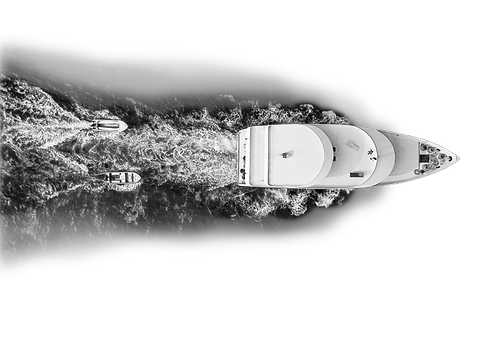
The SEG project is designed to support vessels up to 200' in length (Mega Yachts), which is totally out of line with the conditions in Coral Harbor. There is inadequate depth for safe navigation, insufficient space for maneuvering, and the sound, light, and air quality impacts of these yachts in small Coral Harbor would have a profound impact on the community.
2
Size of Marina
Initially proposed at 149 slips, and now somewhat reduced to around 115 slips, the marina would cover 28.5 acres of Coral Harbor. It is proposed to be built on around one thousand steel pilings, installed by impact pile driving over a period of a year or more. The marina would quite literally consume virtually all of the inner harbor and displace the traditional uses of the waters.
3
Location of Marina
Positioned on the windward shore, with an open fetch to the southeast, the marina is literally in the worst possible location considering impact from wind, waves, and tropical weather.
It is located on a lee shore, which has experienced the brunt of most hurricanes over the past 50 years. The design strength of the marina (96 mph) is inadequate to survive even a Category 3 hurricane, much less an Irma or Maria. This is not a safe location for a large yacht marina.
4
Impact to Protected Resources
Coral Harbor has some of the most extensive and healthy seagrass meadows in the Virgin Islands. Over 90% of the seabed is vegetated in the inner harbor and supports a range of threatened and endangered species, including Green and Hawksbill turtles, five species of endangered corals, Nassau Grouper, and Queen Conch - all of which are either federally endangered or threatened.
The construction and operation of the marina would destroy a minimum of 20 acres of seagrass due to the installation of pilings, structures, and vessel shading. The resulting turbidity would likely extend throughout the harbor, resulting in massive, large scale seagrass die-off.
5
Lack of Supporting Infrastructure
No fuel, no potable water, no police presence, no marine fire services, inadequate electrical power, no medical services... the list goes on.
SEG proposes to sell 2 million gallons of marine fuel per year, delivered by truck over Centerline Rd. This equates to 3-4 full truckloads of fuel delivered per day over Centerline Rd - a clear hazard to the entire island.
Similar issues would arise with wastewater and sewage disposal.
6
Additional concerns
Other issues frequently cited include:
- Creating an exclusive "wealthy white enclave" in Coral Bay
- Obstructing the Virgin Islands National Park visitor experience
- Adverse impact on the ecotourism-based economy of Coral Bay and the East End
- Disrupting the residential, non-commercial "vibe" of Coral Bay and of the area.
A Sacred Symbol
Of Freedom
"Before the American Revolution, or any other revolution in the Western Hemisphere, the first was in Coral Bay with enslaved Africans.
On Nov. 23, 1733, their first strike for freedom took place in Fort Fortsberg with only knives and cutlasses. It was a small group about 14 slaves that changed the history of the Western world..."
- Dr. Olasee Davis, Ph.D., excerpt from his Op-Ed published on The St. Thomas Source
A painting of Coral Bay by Robert H. Schomburgk, dated 1833. (Image courtesy Michael and Jane Sheen collection)

- Kurt G. Marsh, Jr.
Architect and Virgin Islands native
“Development should deepen belonging, not erase it.”


A Change for the Better
True sustainability begins with cultural survival.
We propose an alternative development plan grounded by a different premise: that St. John is not an empty space to be optimized, but a living place—rich with memory, identity, and responsibility.
Drawing from the research and cultural framework articulated in local architect Kurt G. Marsh, Jr.'s So We Live: Within Place, and Without Space, this vision shifts the location of a proposed Coral Bay development and centers local knowledge, cultural continuity, and collective stewardship as the foundation for sustainable progress.
Rather than repeating models that displace residents and erode heritage, this plan reframes development as a long-term asset strategy rooted in people, place, and resilience that reinvests culture back into the land itself—supporting livelihoods, preserving ecological balance, and ensuring that future generations of St. Johnians can not only remain, but thrive.
This approach prioritizes:
-
Durable local economies
-
Cultural continuity as an economic asset
-
Environmental stewardship as risk mitigation
-
Community-rooted governance and ownership models
The result is a development pathway that aligns social impact with financial sustainability—one that protects what makes St. John irreplaceable while creating measurable, long-term value for residents, partners, and investors alike.
This is not resistance to change; it is an insistence that change serve the people and the place, together.
Your Participation Matters Now
St. John is approaching a tipping point, and the costs of inaction are rising.
Cultural displacement weakens social cohesion. Ecological degradation increases climate and insurance risk. A shrinking resident population erodes the very labor, knowledge, and authenticity that tourism itself depends on. These are not abstract concerns—they are measurable liabilities for any long-term investment in the island. Decisions made in the next few years will determine whether the island remains a living cultural homeland—or becomes a curated destination devoid of its people.
This moment also presents a rare opportunity. There is growing alignment among community leaders, cultural practitioners, and values-driven funders who recognize that place-based, culturally grounded development is no longer optional—it is essential. The frameworks, research, and local leadership exist. What is needed now is timely capital, patient partnership, and the courage to invest differently.
We invite you to:
-
Support catalytic projects that center local leadership, cultural infrastructure, and community-serving enterprises
-
Invest in long-term resilience, not short-term extraction
-
Partner with Sunlit St. John to pilot alternative development models that can scale responsibly across the Virgin Islands
-
Help shift the narrative—from consumption of place to stewardship of place
Acting now allows St. John to set a precedent rather than follow a crisis. It enables development that stabilizes land, strengthens local economies, and protects cultural inheritance before displacement becomes permanent.
By participating, you become co-guardians of a future where Coral Bay remains culturally whole, economically viable, and environmentally intact.
Coral Bay has a Story to Tell
We propose a forthcoming motion campaign titled "The Line: Coral Bay". The spot would cover critical moments in St. John's history of development vs environment, evolving across vignettes of "Past", "Present,", and "Future." Narrated by a local voice, the purpose is to present the community with a clear call to action: provide the critical input that will shape the future of our island for generations to come.
See below for a low-budget proof-of-concept spot produced during Covid about Round Bay.
We share this to raise awareness and support to produce a new high-quality 90-second spot focused on Coral Bay: